News
China Slowdown and Tax Shifts Reshape Crude and Mineral Flows: Satellite Verification
Slowing Chinese industrial demand is divergence across African commodity exporters, while European producers face shifting tax regimes. Satellite verification reveals physical trade realignments long before monthly customs prints.
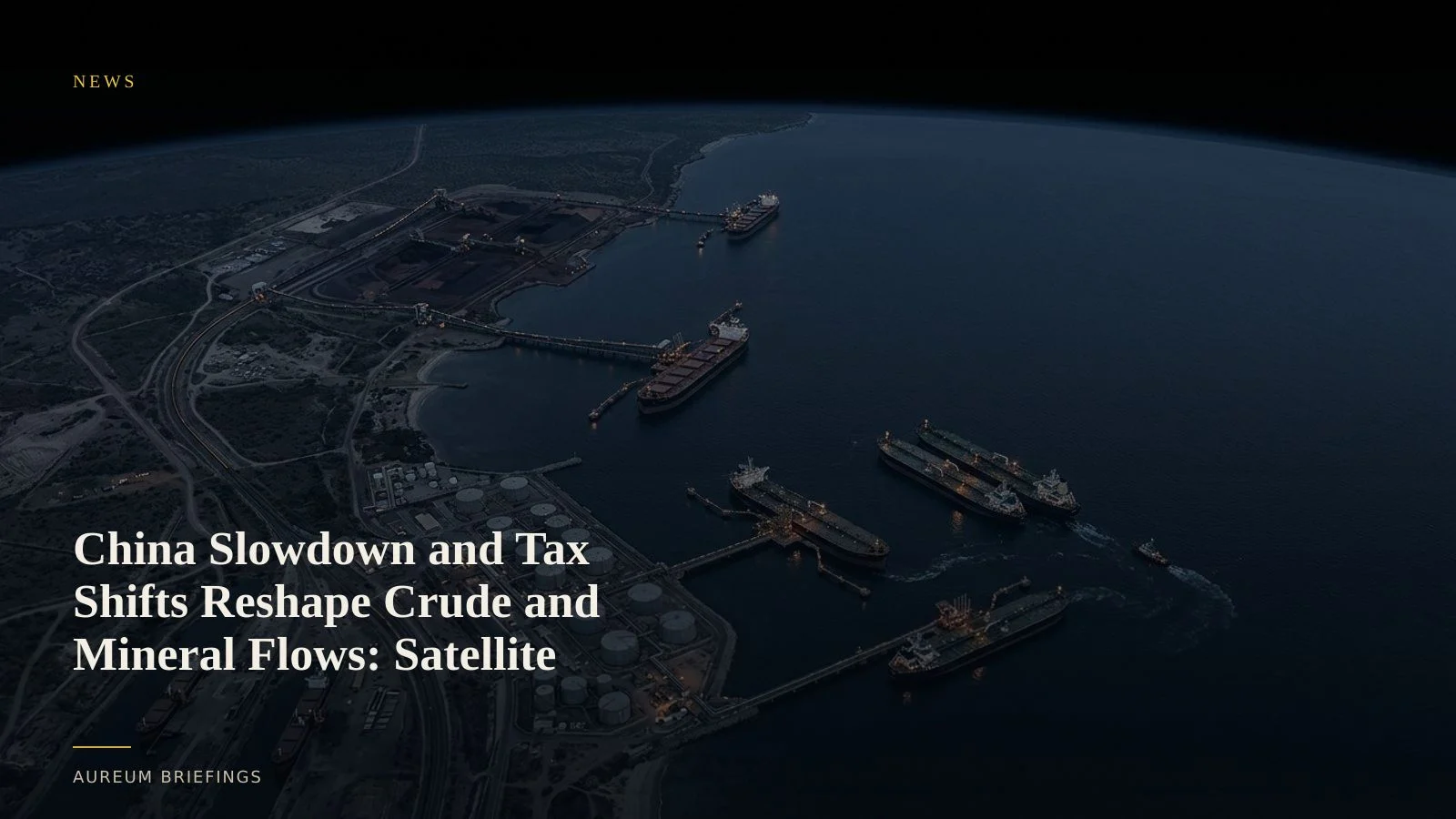
China's cooling demand creates physical trade divergence
China's economic deceleration is sending structural ripples across global raw material supply chains. An Atlantic Council trade assessment highlights how shifting Chinese import appetites are creating clear winners and losers across resource-dependent economies, notably affecting Angolan crude shipments and Congolese copper transit corridors.
While aggregate macroeconomic figures often mask these shifts for weeks, physical trade manifests immediately on the water and along port quays. As Chinese refiners adjust run rates and smelters alter inventory strategies, berth occupancy and vessel staging at key export terminals in Southern and Central Africa show immediate divergence.
Verifying West African berths and mining corridors from space
Evaluating these trade shifts without dedicated research teams usually leaves retail traders relying on lagging customs releases or freight indices like global dry bulk freight benchmarks. Satellite observation offers a direct, empirical alternative.
Using high-resolution satellite radar monitoring, analysts can observe vessel counts at offshore crude berths near Luanda and track container and bulk staging along the Lobito corridor. When Chinese demand contracts, anchored tanker density and concentrate stockpile heights at coastal terminals provide early physical confirmation of export slowing before trade balance reports confirm the trend.
Offshore fiscal shifts and platform activity verification
Compounding global trade reallocations, European energy producers face evolving domestic fiscal pressures. An annual industry economic analysis reports that bringing forward the planned North Sea Oil and Gas Revenue Levy to 2027 could raise up to 14.9 billion pounds in revenue, directly altering offshore operator capital expenditure plans.
Fiscal changes inevitably alter physical operations. High-frequency thermal and optical satellite passes track platform flaring intensity, supply vessel docking frequency, and offshore support rig positioning across North Sea basins, giving commodity traders objective insight into operator responses to changing tax landscapes.
Integrating satellite evidence into market decisions
While large institutional trading groups pay six-figure sums for proprietary geospatial feeds, individual traders frequently depend on dated imagery tools that lack analytical context.
Aureum bridges this gap by delivering satellite-backed clarity directly to your workspace. Use Query to ask targeted questions about terminal bottlenecks or offshore operational shifts, or follow Track to monitor curated KPI boards covering major export hubs and shipping lanes when new satellite passes land.
Start verifying physical market movements
Join the private beta to ask satellite-backed questions and follow curated physical economy tracking boards.