News
Saudi Infrastructure Risks and Distillate Tightness: Satellite Verification
Brent crude has anchored near $105 per barrel as renewed security threats target Saudi energy assets and global distillate markets face physical supply constraints.
Crude surges as distillate markets absorb political and security friction
International oil benchmarks remain elevated as market participants digest renewed threats against Saudi Arabian energy infrastructure and Gulf transit corridors. According to recent market analysis on Saudi crude infrastructure risk, Brent futures have held firm above $105 per barrel, driven by regional security risks and volatile distillate supply dynamics.
At the same time, domestic heating oil and diesel futures dropped 3% to 4% following political discussions regarding Russian fuel trade allowances, highlighting acute sensitivity to regional supply disruptions. While official inventory prints like the EIA weekly petroleum status reports provide baseline figures days after the fact, physical trading desks require early indication of whether regional refiners are adjusting runs or accumulating floating buffer stock.
Middle East industrial diversification creates new supply signatures
Beyond immediate crude security, Middle Eastern industrial economies are accelerating structural supply chain shifts. Analysis from the Atlantic Council on Middle East mineral and digital infrastructure diversification indicates that regional sovereign funds are reallocating capital into critical minerals, heavy processing facilities, and energy-intensive manufacturing hubs.
These new facilities alter the physical baseline. Large-scale mineral processing and specialised refining complexes generate distinctive thermal signatures, structural additions, and bulk material staging patterns that can be measured independently of press releases.
How satellite observation detects physical operational shifts
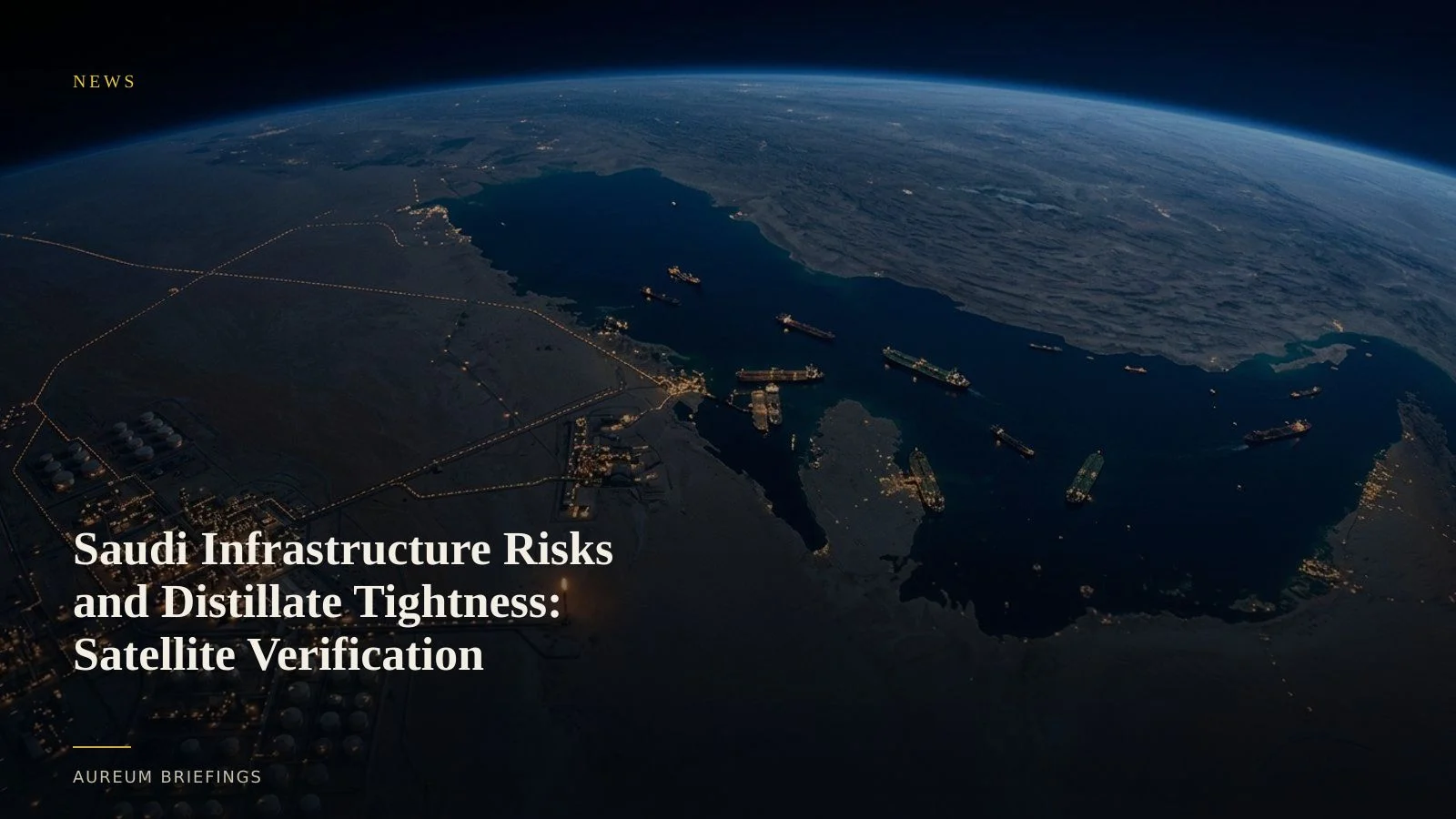
To verify whether a reported security threat or political deal has impacted real-world operations, traders rely on multi-sensor satellite observations. Imagery from ESA Copernicus Sentinel satellite observations allows analysts to evaluate structural changes, flaring activity, and tank roof height variations across key facilities.
Floating-roof tank shadows indicate local inventory accumulation or drawdown before official export figures are finalised. Synthetic aperture radar (SAR) cuts through regional cloud cover or smoke to track vessel staging at offshore berths, showing whether supertankers are loading on schedule or lingering in anchorage zones.
While large institutional desks spend heavily on custom enterprise feeds, individual traders can use satellite-backed answers to check if facility operations match headline narratives.
Integrating satellite intelligence into trading decisions
Evaluating physical market risk requires a consistent workflow. When headlines declare elevated risk around Middle East refining or export routes, traders start by framing a clear physical question.
Using Query, traders can ask whether specific storage farms or refining berths show unusual vessel congestion or drawdown. To monitor ongoing infrastructure stability, traders follow hand-built boards in Track that track key energy and freight corridors continuously as new coverage lands.
This combination replaces speculative headline reading with clear physical verification, enabling traders to react to confirmed operational shifts before weekly market reports print.
Start reading physical market signals
Join Aureum for free during the beta. Ask Earth direct questions with Query, or follow hand-built Track boards on critical market infrastructure.