News
Venezuela Heavy Crude Restarts: Verifying OFAC Sanction Waivers With Satellites
India's state energy giant has secured a US licence to resume operations in Venezuela. Satellite intelligence shows whether physical extraction and export terminal activity match legal announcements.
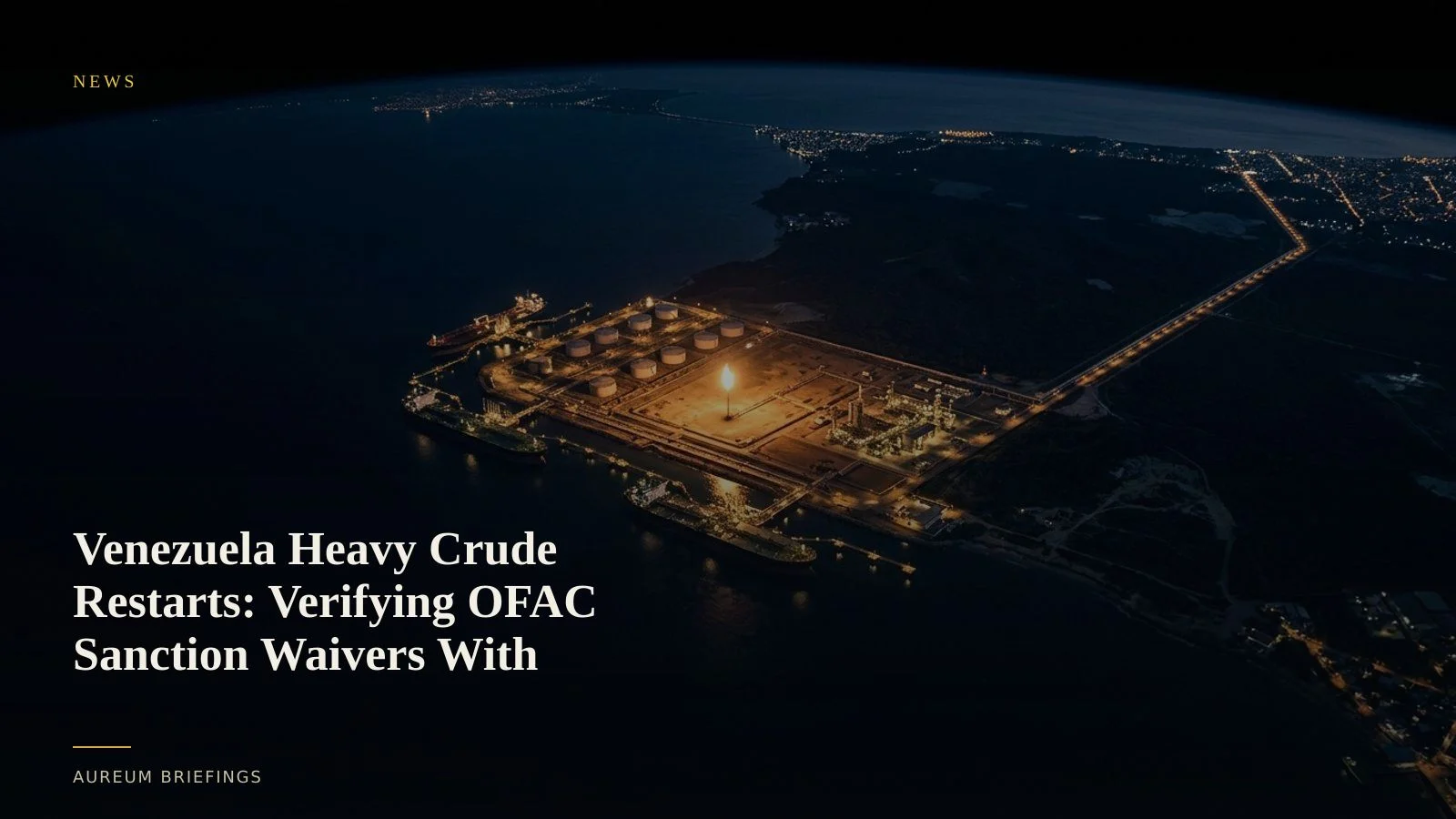
OFAC grants licence for Indian state oil expansion in Venezuela
India's Oil and Natural Gas Corporation (ONGC) has received a specific licence from the US Office of Foreign Assets Control (OFAC) to return to its Venezuelan assets. ONGC's OFAC waiver opens the door for the energy firm to resume operations at its 40% owned San Cristobal project and 11% owned Carabobo project in the Orinoco Heavy Oil Belt, while unlocking access to over $500 million in accumulated dividends.
This regulatory clearance follows shifts in global energy diplomacy and multilateral trade policy. Similar sanctions legislative dynamics analysed by the Atlantic Council demonstrate how Western regulatory exemptions directly dictate physical crude flows from heavily sanctioned producers.
For energy traders and DIY investors, regulatory announcements create immediate price volatility in heavy crude differentials. However, official production figures and customs documentation from Venezuela often lag by months or remain unverified.
Using satellite imagery to verify physical upstream restarts
Confirming whether field operations are actually resuming requires independent physical tracking. Upstream heavy crude extraction in the Orinoco Belt relies on extensive surface infrastructure including steam injection pads, diluent pipeline headers, and active flaring points.
Optical satellites like Sentinel-2 and Landsat allow analysts to observe surface changes across drilling pads, while thermal sensors detect changes in flaring intensity and operational heat signatures. When a long-dormant asset prepares to restart, clearing activity, vehicle staging, and diluent storage tank levels show measurable activity before initial barrels reach the market.
Further downstream at Jose Terminal, floating-roof tank shadow measurements reveal storage fill levels and crude blending operations, providing physical proof that extractions are moving toward export piers.
Institutional tools versus DIY analysis
Institutional commodity desks routinely pay five-figure monthly fees for specialised services like Ursa Space oil tank analytics to track storage volumes and export terminal throughput across sanctioned regimes.
Individual investors and self-directed traders without an institutional research desk historically relied on delayed news reports or static mapping tools that show images months out of date. This creates an intelligence gap when trading energy futures or maritime equities after major regulatory shifts.
Aureum bridges that gap by providing satellite-backed answers and evidence directly to traders without requiring dedicated remote-sensing software or expensive enterprise contracts.
How to track Venezuelan supply changes
When sanctions waivers are granted, traders should establish a systematic verification process to track the operational timeline.
First, monitor upstream well pads in the Carabobo and San Cristobal fields for site preparation and thermal activity. Second, track diluent import arrivals at coastal ports, as Venezuelan extra-heavy crude requires lighter blending agents to flow through export pipelines.
Finally, monitor anchorage density and berth loading durations at Jose Terminal to evaluate whether export volumes are expanding. With Query, self-directed analysts can execute this process in minutes.
Track physical supply changes with space-based intelligence
Join the private beta. Ask Earth direct questions about energy facilities, or follow hand-built Track boards on critical market hubs.