News
Saudi Arabia Secures Singapore Oil Storage: Verifying Asian Inventory Buffers With Satellites
Saudi Aramco plans to store up to 9 million barrels of crude in Singapore's Jurong Rock Caverns to insulate Asian buyers from Middle East transit shocks. Here is how satellite observation tracks the surface terminals and tankers that feed the hub.
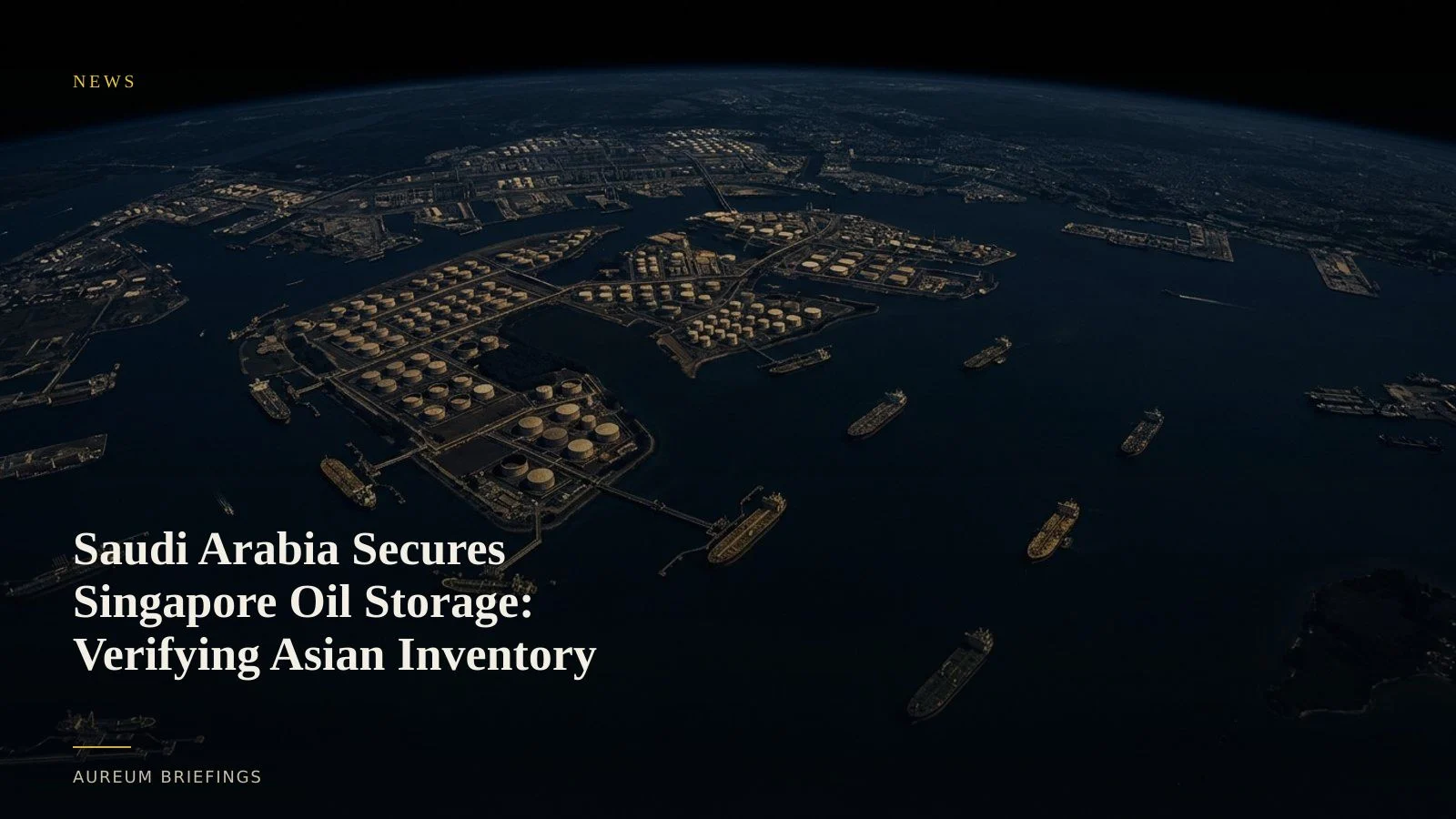
Aramco Moves Inventory Past the Chokepoints
Saudi Arabia has agreed with the Singaporean government to store crude oil in the Jurong Rock Caverns starting in the second half of 2027. Located beneath Jurong Island's petrochemical complex, the caverns hold 1.47 million cubic metres of liquids, or roughly 9 million barrels of crude and condensates. Saudi Aramco is also scouting additional overseas storage capacity to position barrels closer to East Asian refiners.
Forward storage is a physical hedge against transit paralysis. With 80% to 85% of India's crude imports and roughly a third of its merchandise exports exposed to Indian Ocean and Middle East maritime chokepoints, state producers can no longer rely purely on just-in-time tanker strings.
The macro stakes extend across emerging markets. Sustained crude rallies are already straining 2026 fiscal budgets across Latin America, squeezing fuel importers and altering subsidy math for governments.
How Satellites Read an Underground Storage Hub
No orbital sensor can see through solid rock into a subterranean cavern. However, every barrel entering or leaving the Jurong Rock Caverns must cross surface infrastructure: Very Large Crude Carrier (VLCC) jetties, booster pump stations, and adjacent above-ground floating-roof tank farms on Jurong Island.
You verify subterranean inventory shifts by measuring the surface bottleneck. Using open Sentinel-1 radar and Sentinel-2 optical coverage, traders can count tankers berthed at Jurong's liquid bulk terminals and measure shadow lengths on surrounding surface storage tanks to see whether regional buffers are drawing down or building.
Because equatorial cloud cover and monsoon haze frequently obscure the Singapore Strait, optical snapshots alone leave blind spots. Synthetic aperture radar (SAR) pierces cloud cover at metre-class resolution, separating metallic vessel hulls at anchor from open water.
Connecting Asian Buffers to Indian Ocean Rerouting
Singapore sits at the eastern exit of the Strait of Malacca, receiving barrels that first survive the Arabian Sea and smaller passages around Lakshadweep, the Maldives, and Sri Lanka. When Red Sea and Persian Gulf disruptions force vessels into the Mozambique Channel or extended Cape routes, discharge schedules in Singapore bunch up.
Traders pairing floating-roof tank shadow measurements with vessel staging counts can spot whether Jurong Island's surface tanks are absorbing delayed arrivals or releasing barrels to regional refineries.
If surface tanks at Jurong draw down while anchorage queues thin out, physical tightness is hitting East Asian refiners directly, long before official monthly customs data confirms a supply dip.
Running Physical Storage Checks Without a Research Desk
Large oil trading houses pay six-figure fees for enterprise tank farm analytics from Ursa Space to track weekly inventory shifts across Asian petrochemical hubs. Independent traders cannot justify those enterprise contracts, so they usually fall back to free tools that only provide dated imagery without analysis.
Aureum puts satellite-backed verification within reach of individual commodity traders. When a sovereign storage deal or downstream inventory buffer shift hits the tape, you can use Query to inspect recent Sentinel-2 and Sentinel-1 passes over Jurong Island, checking tank shadow geometry and jetty occupancy without building a GIS pipeline.
To keep up with the upstream supply corridors feeding Asia, you can also follow Aureum's hand-built Track boards on the Strait of Hormuz and Bab el-Mandeb, pairing corridor transit evidence with spot checks on destination terminals.
Check the physical barrels before the monthly print
Free to join during the beta. Ask Earth a question about storage hubs and terminals with Query, or follow hand-built Track boards on major energy corridors.