Guide
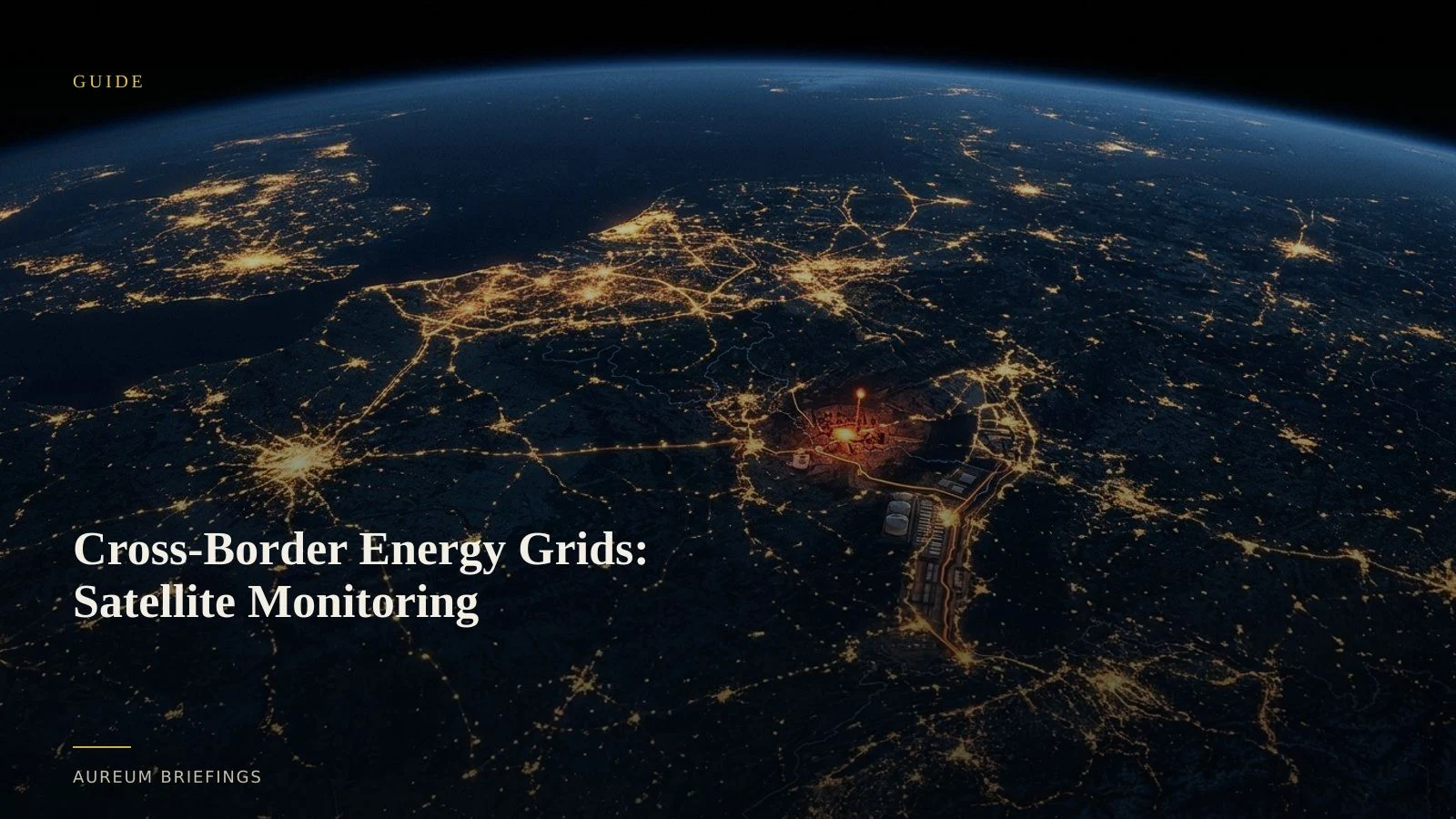
Cross-Border Energy Grids: Satellite Monitoring
Cross-border electricity lines and gas pipelines move billions in physical trade every month. Here is how satellite radar and thermal sensors verify volume before official trade tables update.
Customs reports lag real physical energy transfers
Cross-border energy trade involves physical gas pipelines, liquified fuel terminals, and high-voltage electricity interconnectors. Official statistics published in official energy trade balance figures provide detailed accounting, but they usually arrive weeks or months after physical movement occurs.
When natural gas flows or cross-border power transfers fluctuate, waiting for official customs publications leaves traders reacting to stale information. Commodity traders need to verify whether interconnectors and compressor stations are running at capacity today.
How orbital sensors detect cross-border flow
Satellite observation fills this reporting gap by tracking physical infrastructure directly. Earth observation platforms using synthetic aperture radar can penetrate cloud cover day or night, detecting structural changes, thermal signatures, and activity levels at key transit hubs.
By monitoring cooling plumes at thermal generating stations, transformer substation thermal signatures, and gas compressor flaring using open European space observation infrastructure, analysts assess grid load changes without relying on delayed operator statements.
Large institutions can afford automated change detection from industrial satellite monitoring platforms; DIY and individual investors usually cannot, so they need a cheaper path to the same physical check on cross-border transmission corridors.
Verifying infrastructure disruptions and wildland hazards
Extreme weather events and environmental hazards regularly threaten cross-border transmission corridors. Tracking heatwaves, severe storms, and encroaching wildfire activity near critical power lines through open environmental change tracking systems helps quantify supply risks before transmission operators curtail capacity.
When wildland fires approach major high-voltage corridors or unseasonal cold snaps spike regional heating demand, physical evidence from orbit clarifies whether power flows remain stable or face immediate curtailment.
Moving from delayed trade tables to physical verification
Institutional trading desks historically spent millions building proprietary geospatial pipelines to monitor physical energy infrastructure. DIY investors and independent commodity traders were forced to rely on delayed public summaries.
Using Query and Track, independent traders can evaluate cross-border energy flows and assess infrastructure status in minutes. The physical economy does not hide from orbit.
Run the physical verification workflow
Free to join during the beta. Ask Earth a question about cross-border energy infrastructure, or follow hand-built Track boards.